
How Much Does Custom Perfume Packaging Cost?
How Much Does Custom Perfume Packaging Cost?
The honest answer to how much custom perfume packaging costs is that there is no meaningful universal price per set. A fragrance package may use a stock glass bottle with one-color printing and a folding carton, or it may require a proprietary heavy-glass mold, a custom metal cap, a premium pump, several surface finishes, a rigid presentation box, and protective inserts. Both are “custom perfume packaging,” but their development costs, minimum order quantities, cash requirements, and production risks are completely different.
For a brand owner, the most important number is not always the bottle's quoted unit price. A project with a 3,000-piece stock-bottle minimum may still require 10,000 pumps or caps. Tooling, samples, decoration setup, inspection, inner packing, freight, duties, and unused inventory may sit outside the headline unit cost. A package that appears inexpensive on the first quotation can therefore demand more launch capital than expected.
A reliable budget must answer three separate questions:
What does one complete packaging set cost when all components are used?
How much cash must the brand commit to meet every component and process MOQ?
What is the landed packaging cost per sellable unit in the first production run?
This guide explains each cost layer in detail. It covers glass bottles, custom molds, pumps, collars, caps, decoration, paper boxes, samples, testing, quality control, packing, freight, and inventory. It also provides formulas, an illustrative calculation, cost-reduction strategies, and an RFQ checklist that fragrance brands can use to obtain comparable quotations.
For readers asking how much does perfume packaging cost, the central lesson is simple: price becomes meaningful only after the complete pack, quantities, destination, and approval standard are defined.
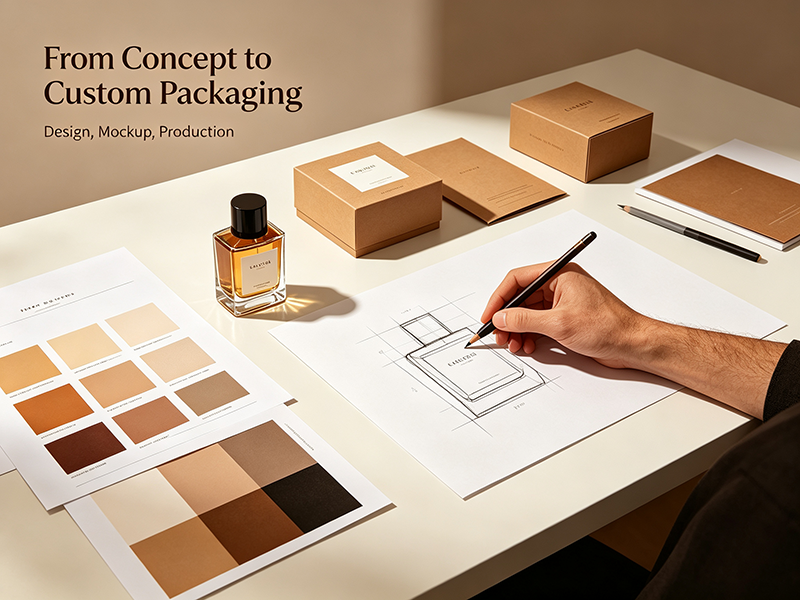
The Short Answer: Custom Perfume Packaging Cost Is a System, Not One Price
The basic cost equation is:
Total project cash requirement = component purchases + decoration + one-time development + samples and testing + quality control + protective packing + logistics and import costs + contingency
The first-run landed cost per sellable unit is:
First-run landed packaging cost per sellable unit = total cash paid for packaging and delivery ÷ number of complete retail units available for filling
These formulas reveal why a supplier cannot provide a responsible final price from a reference image alone. The calculation requires at least the capacity, bottle route, quantity by SKU, pump and cap design, decoration, box style, packing, destination, and commercial term.
As a practical rule:
A stock bottle with standard components and controlled decoration usually requires less development investment and less glass inventory.
A fully custom bottle and closure system usually requires tooling, more engineering, a higher minimum commitment, and a longer path to mass production.
A hybrid package—stock glass plus a signature color, print, cap finish, plaque, or box—often provides the most efficient balance for a new brand.
The goal is not to make packaging as cheap as possible. It is to achieve the brand's required appearance and performance while protecting margin, cash flow, launch timing, and reorder flexibility.
Four Different Cost Numbers Every Brand Should Track
Brands frequently compare suppliers using numbers that measure different things. Before evaluating a quote, separate these four cost views.
1. Component Unit Cost
This is the quoted price for one bottle, pump, cap, box, or decoration process at a stated quantity and commercial term. It is useful for comparison only when the specifications are identical.
For example, two caps that look similar may use different materials, weights, inner structures, finishes, retention systems, or packing methods. Their unit prices are not directly comparable until those details are aligned.
2. Complete Packaging Cost per Used Set
This adds the components physically used in one finished retail pack:
Glass + pump + collar + cap + bottle decoration + label or plaque + box + insert + inner packing + allocated recurring inspection or assembly
This number is useful for product margin planning, but it may not show the amount the brand must purchase.
3. Total Project Cash Requirement
This is the money needed to launch the packaging program. It includes all minimum purchases, even when some components will remain unused after the first filling run.
Total project cash = quantity purchased × unit cost for every component and process + one-time charges + development + freight and import costs
If a brand fills 3,000 bottles but buys 10,000 pumps and caps, the cash requirement includes all 10,000 closures.
4. First-Run Landed Cost per Sellable Unit
This divides the full project cash by the number of complete units that can actually be filled and sold in the first run.
This is a conservative launch-capital metric. It does not mean the unused components have zero value; they may support a reorder. However, they still consume cash, storage space, and carry obsolescence risk.
The purchasing team should track all four numbers. A low component unit price can coexist with a high first-run cash burden.
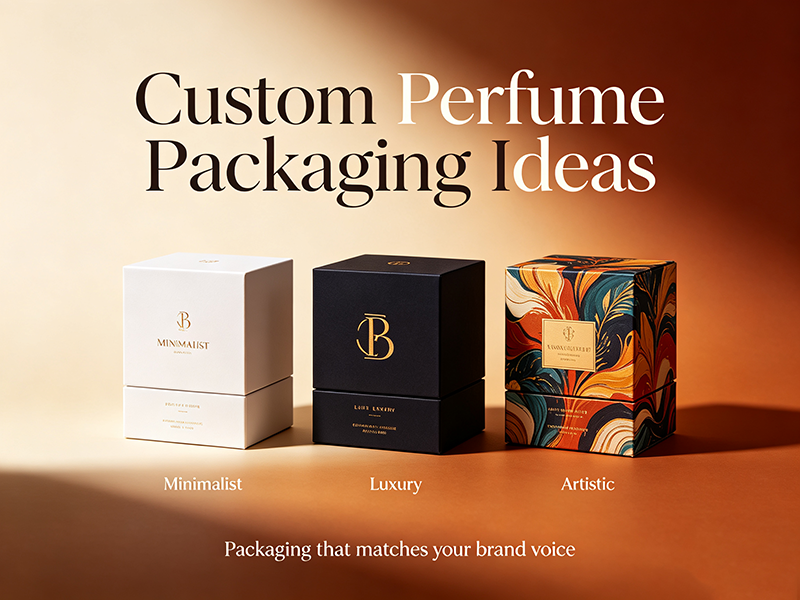
Custom Perfume Packaging Cost Breakdown at a Glance
| Cost layer | Typical items | Why the price changes |
|---|---|---|
| Glass bottle | Stock bottle or custom glass | Capacity, weight, glass quality, geometry, neck, quantity |
| Tooling | Bottle mold, cap tool, insert tool, dies, fixtures | Complexity, cavities, material, revisions, ownership terms |
| Pump and collar | Fine-mist pump, gasket, dip tube, ferrule | Dosage, finish, neck compatibility, order quantity |
| Cap | ABS, PP, aluminum, zamac, wood, acrylic, magnetic construction | Material, weight, structure, finish, tooling, assembly |
| Bottle decoration | Spraying, printing, foil, frosting, decals, UV, metallization | Coverage, colors, artwork, setup, curing, reject risk |
| Outer packaging | Folding carton, rigid box, insert, sleeve | Size, board, paper, print, structure, finishing, assembly |
| Sampling | Reference, prototype, mold trial, decorated and complete samples | Number of rounds, tooling, materials, courier |
| Quality and testing | Inspection, fit, leakage, adhesion, abrasion, packing tests | Standard, sample size, laboratory or third-party needs |
| Packing | Bags, trays, dividers, cartons, pallets | Bottle weight, surface sensitivity, shipping route |
| Logistics | Inland freight, export handling, ocean or air freight, insurance | Volume, weight, route, term, season |
| Import and local costs | Duty, tax, customs, handling, delivery | Destination, classification, importer arrangement |
| Inventory financing | Excess components and storage | Mismatched MOQs, SKU count, forecast accuracy |
The percentage contributed by each layer changes with the concept. In a simple stock project, the bottle and closure may dominate. In a sculptural luxury project, tooling, heavy glass, a custom cap, rigid box, and logistics can all become material cost centers.
1. Custom Perfume Bottle Cost and Stock Glass Cost
The bottle is the visual and structural center of the package, but its price depends on more than capacity.
Stock Glass Bottle Cost
A stock perfume bottle uses an existing mold. The supplier may have physical inventory or may schedule a new production run using established tooling.
Stock glass normally reduces:
New-mold investment
Engineering and trial cost
Development time
Risk of structural revision
Minimum glass commitment
However, “stock” does not always mean ready to ship. Confirm whether finished glass exists, how much is available, which neck it uses, and whether the desired pump and cap are also available.
The price of stock glass can vary with:
Bottle capacity
Glass weight and base thickness
Shape and production efficiency
Clear, tinted, or other glass specification
Current inventory or required production run
Quantity
Packing standard
Quality acceptance level
Stock glass also does not mean generic finished packaging. The bottle can still be customized through color, printing, foil, frosting, labels, plaques, caps, and boxes.
Custom Glass Bottle Cost
A custom glass bottle requires design review, technical drawings, mold fabrication, trial glass, inspection, possible correction, and mass production from project-specific tooling.
The custom bottle cost is influenced by:
Silhouette and complexity
Capacity and brimful-volume target
Bottle dimensions and glass distribution
Glass weight
Shoulder, corner, and base geometry
Neck position and finish
Embossed or debossed details
Number of mold cavities and tooling structure
Expected production volume
Trial and correction cycles
Quality requirements and expected yield
A heavier bottle usually uses more material and increases freight weight. It may also require more protective packing. Heavier glass can contribute to shelf presence, but it should have a commercial reason rather than function as the only signal of luxury.
Bottle Size Does Not Determine Price by Itself
A 100ml bottle is not automatically twice the price of a 50ml bottle. Geometry, glass weight, manufacturing efficiency, base design, neck, and quantity can have a greater effect than nominal capacity.
When comparing any perfume bottle packaging price, request the bottle weight, dimensions, capacity, neck specification, packing configuration, and quoted quantity. Otherwise, the products may not be equivalent.
2. Custom Mold and Tooling Costs
Tooling is usually a one-time development cost, but the term can cover several different items.
Potential tooling charges include:
Glass bottle mold
Prototype or development tooling
Custom cap mold
Inner cap or retention-component mold
Collar tooling
Plaque or badge tooling
Box cutting die
Molded-pulp, EVA, paper, plastic, or other insert tooling
Screen-printing screens
Hot-stamping dies
Spray masks and holding fixtures
Assembly or inspection fixtures
Ask the supplier to separate one-time and recurring charges. A box die or screen may need replacement after changes, while a bottle mold may be maintained for repeated production under agreed conditions.
What Changes Glass Mold Cost?
Major factors include:
Number and type of mold parts
Design complexity
Bottle size and geometry
Mold material and expected life
Number of cavities
Sampling approach
Engineering and drawing work
Revisions after trial production
Tooling storage and maintenance terms
Do not compare mold prices without confirming what they include. One quote may cover design, trial glass, and correction, while another covers only the physical mold.
Clarify Ownership Before Payment
The agreement should state:
Who owns the mold and drawings
Whether the tooling or design may be used for another buyer
Where the mold is stored
Who maintains it
What happens if it is inactive for an extended period
Whether it can be transferred
Who pays for modifications or replacement
Paying a mold fee does not automatically clarify all of these rights. Written terms reduce future disputes and protect a bottle intended to become a long-term brand asset.
Amortize Tooling Carefully
For product-margin analysis, a brand may allocate tooling over an expected volume:
Tooling cost per expected unit = total one-time tooling ÷ realistic lifetime unit volume
If the design is expected to support 100,000 units, a tooling cost can be allocated across that volume. For launch cash planning, however, the full tooling payment must still be funded before or during development. Do not use lifetime amortization to hide the immediate cash requirement.
3. Perfume Pump and Collar Cost
The pump is a functional component. Its cost depends on performance and finish, not only appearance.
Relevant variables include:
Crimp or screw configuration
Neck compatibility
Dosage per actuation
Spray pattern and atomization
Gasket and internal material selection
Dip-tube material, length, and cut
Collar or ferrule material
Standard or custom finish
Color and decoration
Packing and assembly method
Quantity
A low-cost pump that leaks, produces an inconsistent spray, or does not fit the neck can create far more cost than it saves. Bottle, pump, collar, and cap compatibility should be confirmed through complete assembly samples and appropriate functional testing.
The collar may use aluminum, plastic, or another construction, with spraying, anodized appearance, metallization, electroplating, or other finishes depending on the component. A small visible color difference between the collar and cap can weaken the finished package even when both are individually described as “gold.”
At DAXIN, the pump MOQ reference is 10,000 pieces. This can be higher than the stock glass minimum and should be included in the launch cash calculation.
4. Perfume Cap Cost
The cap can be one of the largest cost differences between two packaging concepts. It combines visible material, weight, finish, internal engineering, fit, and sometimes custom tooling.
Common Cap Materials and Cost Drivers
Plastic Caps
ABS, PP, Surlyn-type clear materials, acrylic, and other suitable plastics can support many shapes and finishes. Cost depends on resin, weight, wall thickness, number of parts, tooling, surface finishing, and assembly.
Plastic is not automatically inexpensive when the cap uses multiple parts, complex tooling, metallization, a heavy internal insert, or manual assembly.
Aluminum Caps
Aluminum can provide a cool touch, metallic authenticity, and a clean premium finish. Cost depends on material thickness, forming or machining route, anodized or coated finish, inner structure, weight, and quantity.
Zamac or Other Metal Caps
Heavy metal caps can create strong perceived value and intricate shapes. They also increase material cost, tooling, weight, freight, and protective-packing requirements. Plating and surface consistency need careful control.
Wood Caps
Wood introduces grain and natural variation. Species, sourcing, drying, machining, coating, insert construction, magnets, and inspection all affect cost. A brand must decide how much color and grain variation is acceptable.
Magnetic Caps
Magnetic closure is a construction feature, not a material category. The cap may contain magnets, an inner shell, weights, and alignment elements. Cost depends on part count, assembly, magnetic strength, polarity control, and bottle or collar interface.
Stock Cap vs Custom Cap
A stock bottle paired with a custom cap can deliver strong differentiation, but it can also remove much of the MOQ and cash advantage of stock glass. Ask for cap MOQ, tooling, lead time, retention method, pull force, finish, and available inner structures before committing to the bottle.
At DAXIN, the cap MOQ reference is 10,000 pieces. Review the closure inventory across the entire collection rather than one fragrance at a time. Sharing one cap across several SKUs can improve purchasing efficiency.
5. Perfume Bottle Decoration Cost
Decoration changes the same glass bottle into different brand expressions. Cost depends on surface coverage, colors, process sequence, geometry, setup, curing, quality standard, and reject risk.
Spray Coating
Spraying can create transparent tints, gradients, solid colors, matte or gloss surfaces, and masked clear windows. Cost changes with:
Number of colors
Coverage area
Transparent or opaque system
Gradient complexity
Masking
Surface preparation and topcoat
Color-development rounds
Bottle geometry
Required resistance
At DAXIN, spraying uses a 3,000-piece MOQ reference per color. Three fragrance colors can therefore create three separate minimum runs.
Silk-Screen Printing
Screen printing is suitable for logos, names, text, and relatively simple graphics. Each color may require a separate screen and printing pass. Cost is affected by artwork area, number of colors, registration, ink system, bottle curvature, and production quantity.
At DAXIN, the silk-printing MOQ reference is 1,000 pieces.
Hot Stamping
Hot stamping uses foil, heat, and pressure to create a metallic or specialty accent. Cost depends on die preparation, artwork area, foil, bottle geometry, substrate compatibility, and production speed.
Frosting
Frosting may be created through different methods, such as changing the glass surface or applying a frost-effect coating. These routes have different cost, appearance, durability, and process-control requirements.
Decals and UV Digital Printing
Decals and digital printing can support detailed multicolor artwork. Cost depends on print area, color, white underlayers, application, curing, equipment capability, and quantity. Digital printing can reduce screen preparation for complex artwork but is not automatically the lowest-cost route for every volume.
Metallization and Electroplating
Metallization can create a mirror-like bottle surface. Electroplating is commonly used for caps, collars, and other suitable components. Reflective finishes demand strong surface preparation, color coordination, inspection, and protective packing.
At DAXIN, electroplating uses a 10,000-piece MOQ reference.
Combined Decoration
When spraying, printing, foil, labels, or metallization are combined, cost is more than the sum of visible effects. Each layer adds handling, curing, registration, inspection, and possible rejection. The supplier should confirm the sequence and compatibility before quotation.
6. Custom Perfume Box Cost and Insert Cost
The outer package can range from a simple folding carton to a heavy rigid box with a custom insert, foil, embossing, specialty paper, and magnetic closure.
Folding Carton Cost Drivers
Box dimensions
Board grade and thickness
Paper or printed surface
Number of print colors
Matte or gloss lamination
Foil, embossing, debossing, spot UV, or texture
Die-cut complexity
Insert design
Folding and gluing
Quantity
Folding cartons are generally efficient for standard retail packaging, but a small dimensional change can affect material usage, shipping volume, and fit.
Rigid Box Cost Drivers
Greyboard thickness
Wrap paper or printed sheet
Book-style, lift-off, drawer, or other structure
Magnets, ribbons, hinges, or closures
Hand assembly
Insert material and finish
Foil, embossing, texture, or specialty paper
Size and shipping volume
A rigid box can cost substantially more than a folding carton because of materials, labor, assembly, and volume. It also occupies more freight and storage space, especially when shipped fully assembled.
Insert Cost Drivers
Possible inserts include folded paperboard, molded pulp, EVA, foam, vacuum-formed plastic, fabric-covered structures, and other constructions. Material, tooling, cutouts, assembly, bottle weight, protection, and sustainability requirements affect cost.
Develop the box after the complete bottle, pump, collar, and cap assembly is dimensionally stable. Approving the box too early can cause rework if the final cap height or bottle diameter changes.
At DAXIN, the paper-box MOQ reference is 3,000 pieces. Final minimums depend on structure, material, finishing, and artwork.
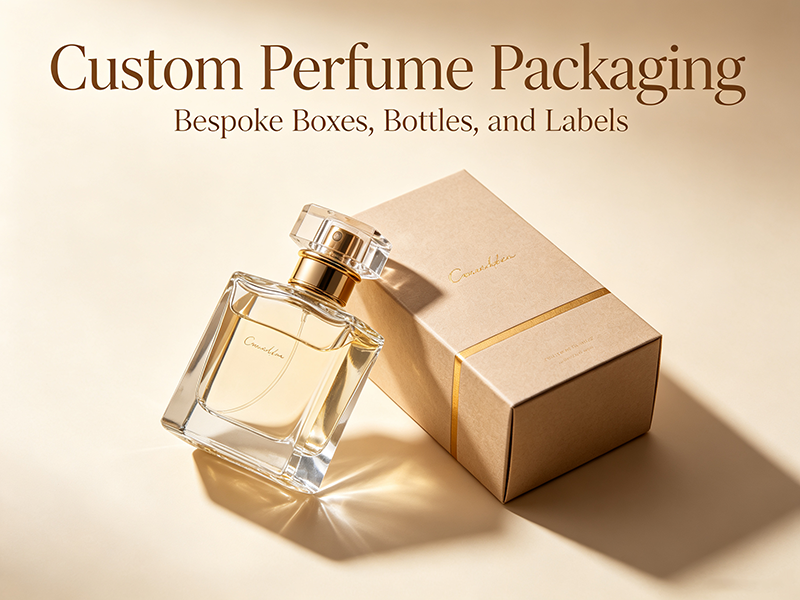
7. Design, Sampling, and Development Costs
Samples are not free simply because the mass-production price is attractive. They require materials, setup, tooling, machine time, manual work, inspection, and courier delivery.
Possible sample stages include:
Catalog or reference sample
3D rendering
Technical drawing
3D prototype
Glass mold trial
Clear glass sample
Decoration color trial
Printed or hot-stamped sample
Pump and cap fit sample
Complete assembly sample
Folding-carton or rigid-box sample
Pre-production or golden sample
Ask which samples use mass-production materials and tooling. A hand-finished prototype may be useful for visual review but may not demonstrate normal production variation or durability.
The sample budget should also include courier costs and revision rounds. International sampling can become expensive when the brand changes the design repeatedly after each stage. Freeze core decisions in the correct sequence: glass geometry, neck and closure, decoration, then final box dimensions.
Design Changes Are a Cost Center
Late changes can require new drawings, tooling modification, screen or die replacement, new color trials, revised cap structures, and another box sample. They may also move the project to a later production slot.
Use version control for drawings, artwork, colors, bills of materials, and samples. A disciplined approval process reduces both direct charges and hidden schedule cost.
8. Quality Control, Testing, and Inspection Costs
Quality costs should be planned rather than treated as an unexpected surcharge.
Depending on the project, checks may include:
Bottle dimensions and capacity
Neck finish and stability
Glass visual defects
Pump fit and spray function
Leakage and crimp quality
Cap retention and alignment
Decoration color and artwork position
Adhesion and abrasion
Box dimensions and printing
Insert fit and packing
Pre-shipment inspection
Testing may be performed by the supplier, buyer, filler, or independent laboratory, depending on the requirement. Third-party inspection also has a cost, but it can reduce the risk of discovering material defects after the balance is paid and the goods are shipped.
The brand should define which defects are critical, major, and minor; which sampling plan or AQL approach applies where appropriate; and what happens when production does not meet the agreed standard.
The objective is not to demand impossible perfection. It is to create measurable acceptance criteria that fit the product position and prevent disputes.
9. Protective Packing Cost
Perfume bottles are fragile, and decorated surfaces can scratch. Packing cost depends on both bottle protection and finish protection.
Potential elements include:
Individual bags or sleeves
Soft interleaving material
Dividers
Molded trays
Inner cartons
Export cartons
Edge or base protection
Pallets and wrapping
Labels and handling marks
Heavy or irregular bottles may require stronger dividers and cartons. Metallized, glossy black, soft-touch, or raised-print finishes may need individual protection to prevent rubbing.
Compare packing specifications with quotations. A lower bottle price may exclude the protective method required to deliver sellable goods.
Packing also affects container utilization. A larger bottle or rigid box reduces the number of units per carton or container, increasing freight cost per unit.
10. Freight, Duties, Taxes, and Local Delivery
An ex-factory or FOB packaging price is not the same as landed cost.
Depending on the trade term and route, the buyer may need to budget for:
Factory-to-port transport
Export handling and documents
Port charges
Ocean, rail, truck, or air freight
Cargo insurance
Destination handling
Customs brokerage
Import duty and tax
Examination or storage charges
Delivery to the filling or warehousing location
Freight is affected by gross weight, cubic volume, route, carrier, season, and service level. Perfume glass can be dense, while rigid boxes can be volumetric. Quoting freight before final carton size and weight are known produces only an estimate.
Airfreight may help recover a delayed launch but can erase the savings achieved through months of unit-price negotiation. Schedule control is therefore part of cost control.
Import duties and taxes depend on destination, product classification, origin, and importer circumstances. Confirm them with a qualified customs or tax professional rather than relying on a packaging supplier's general estimate.
How Perfume Packaging MOQ Changes the Real Cost
MOQ is not one number for the project. It applies at component, process, color, capacity, and SKU level.
At DAXIN, the following planning references apply:
| Component or process | MOQ reference |
|---|---|
| Custom glass bottle | 10,000 pcs |
| Stock glass bottle | 3,000 pcs |
| Cap | 10,000 pcs |
| Pump | 10,000 pcs |
| Paper box | 3,000 pcs |
| Spraying | 3,000 pcs per color |
| Silk printing | 1,000 pcs |
| Electroplating | 10,000 pcs |
These are DAXIN planning references, not universal industry prices or minimums. Final MOQs depend on the selected component, process, color, artwork, material, and production plan.
The Highest MOQ Controls Launch Cash
Assume a brand wants 3,000 decorated stock bottles. The glass, spraying, and boxes may each align at 3,000 pieces, but the pump and cap may require 10,000. The brand can fill only 3,000 units immediately, yet it must finance 7,000 extra pumps and caps.
Possible responses include:
Select available standard closures with a more compatible quantity
Use one shared pump and cap across several fragrances
Purchase excess components for a credible reorder plan
Increase the first filling quantity if demand and cash flow support it
Simplify or redesign the closure
The correct option is not always the lowest initial quantity. Buying a technically weak cap or poor pump to reduce MOQ can damage the product. The decision should protect both margin and package performance.
SKU Fragmentation Multiplies Cost
A 12,000-piece collection divided into four sprayed colors may be four 3,000-piece decoration runs. Four boxes with different artwork may also require separate setups. If the collection uses different caps, each version may carry its own minimum.
Calculate quantity at the smallest meaningful unit:
Capacity × fragrance × bottle color × print artwork × cap version × box version
Reducing unnecessary variation is one of the most effective ways to lower cost without reducing material quality.
A Hypothetical Cost Example for a 3,000-Unit Launch
The example below is for calculation training only. The values are deliberately hypothetical. They are not a DAXIN quotation, price list, supplier benchmark, or promise of market pricing. Real prices require a complete RFQ and current production review.
Assumed Packaging Specification
3,000 stock glass bottles
One spray color and one printed logo
10,000 standard pumps because of component MOQ
10,000 coordinated caps because of component MOQ
3,000 folding cartons
Standard protective packing
One-time samples, setup, and independent inspection allowance
Freight, duty, tax, filling, formula, and retail distribution excluded
Hypothetical Numbers
| Item | Purchase quantity | Assumed unit or project cost | Cash required |
|---|---|---|---|
| Stock glass bottle | 3,000 | $0.60 | $1,800 |
| Pump and collar | 10,000 | $0.16 | $1,600 |
| Cap | 10,000 | $0.32 | $3,200 |
| Spray and print | 3,000 | $0.30 | $900 |
| Folding carton | 3,000 | $0.42 | $1,260 |
| Protective packing | 3,000 | $0.08 | $240 |
| Samples and setup | Project | — | $650 |
| Inspection allowance | Project | — | $350 |
| Total packaging cash before freight and import | $10,000 |
What the Example Shows
The recurring components physically used in one complete unit equal:
0.60 bottle + 0.16 pump + 0.32 cap + 0.30 decoration + 0.42 box + 0.08 packing = $1.88 per used set
The one-time sample and inspection allowance adds:
(650 + 350) ÷ 3,000 = $0.33 per first-run unit
On a consumption basis, the packaging and allocated one-time cost appear to be:
1.88 + 0.33 = $2.21 per unit before freight and import
But the brand must pay $10,000 to obtain the quantities required. Dividing that cash by 3,000 immediate sellable units produces:
10,000 ÷ 3,000 = **3.33 cash committed per first-run sellable unit before freight and import**
The difference is mainly the 7,000 unused pumps and 7,000 unused caps. They are not necessarily wasted; they represent $3,360 of component inventory that may support future production. They are still a cash-flow and obsolescence risk.
This is why “How much does one package cost?” needs two answers: the cost of components consumed and the cash required by minimum purchases.
How to Build a Custom Perfume Packaging Budget Without Inventing Prices
If supplier pricing is not yet available, build a structural cost model with missing inputs clearly marked.
Step 1: Define the Sellable Unit
List every item in one retail pack:
Bottle
Pump
Collar
Cap
Decoration
Label or plaque
Box
Insert
Protective inner packing
Step 2: Record the Quantity Needed
Enter the filling quantity by capacity and SKU.
Step 3: Record Every MOQ
For each line, record:
Required quantity
Supplier MOQ
Purchase quantity
Excess inventory
Reuse plan
Step 4: Separate One-Time and Recurring Costs
One-time costs may include design, molds, dies, screens, masks, prototypes, and initial testing. Recurring costs include production components, decoration, packing, and recurring inspection.
Step 5: Add Logistics
Use final or estimated carton count, gross weight, cubic volume, trade term, destination, and shipping method. Keep estimates labeled until booking.
Step 6: Add a Controlled Contingency
Contingency should cover defined uncertainty, not replace proper specifications. Possible risks include an extra color sample, tooling adjustment, third-party inspection, or freight movement. Do not use contingency to hide an unrealistic base budget.
Step 7: Calculate Three Outputs
Complete used-set cost
Total project cash requirement
First-run landed cost per sellable unit
Also calculate the expected reorder cost after one-time tooling is paid and unused components are consumed. The first order and reorder may have very different economics.
Stock vs Custom Packaging: How the Cost Structure Changes
| Cost area | Stock-bottle custom package | Fully custom bottle package |
|---|---|---|
| Glass tooling | Usually none for existing mold | New glass mold and trials |
| Glass MOQ reference at DAXIN | 3,000 pcs | 10,000 pcs |
| Engineering | Selection and compatibility | Shape, glass distribution, neck, tooling, trials |
| Development time | Generally shorter | Longer and revision-dependent |
| Shape exclusivity | Limited | Potentially proprietary, subject to agreement |
| Decoration | Main source of visual differentiation | Supports the custom shape |
| Cash exposure | Lower glass exposure but closures may remain high | Higher glass and development commitment |
| Design flexibility before launch | Higher | Lower after tooling begins |
| Reorder | Established bottle route may be simpler | Requires continued tooling and process control |
When Stock Packaging Usually Creates Better Economics
Stock glass is often appropriate when:
The brand is testing demand
The first order is closer to 3,000 units
Launch timing is sensitive
Funding should remain available for formula, marketing, and distribution
Decoration and the box can create sufficient differentiation
The brand may change capacity or positioning after feedback
When Custom Glass May Justify the Investment
A custom bottle may be commercially reasonable when:
The silhouette is central to the brand concept
Projected volume supports the 10,000-piece glass MOQ
Demand or distribution is credible
The design can support several reorders or fragrances
The brand has enough time and capital for development
The proprietary asset supports price position, recognition, or strategic value
Custom glass should not be selected only because it appears more prestigious. It should create enough long-term value to justify its cost and reduced flexibility.
A Break-Even Framework for Custom Tooling
The simplest tooling calculation is:
Tooling cost per unit = tooling investment ÷ cumulative units produced
If a project incurs a tooling cost represented by T and expects lifetime volume V, then:
Allocated tooling cost = T ÷ V
However, this does not prove the investment is worthwhile. The custom design should produce incremental value through one or more mechanisms:
Higher achievable retail price
Stronger sell-through
Improved brand recognition
Reduced need for secondary decoration
Reuse across multiple fragrances
Distributor or retailer acceptance
Long-term control of a recognizable packaging platform
A structural break-even model is:
Break-even units = incremental tooling and development cost ÷ incremental contribution margin created per sold unit
If the brand cannot support the assumption that the custom package creates incremental contribution, the tooling decision should be justified as a strategic brand investment and funded accordingly—not presented as automatic ROI.
How Retail Price and Margin Should Influence Luxury Perfume Packaging Cost
There is no universal percentage of retail price that every fragrance brand should spend on packaging. Wholesale structure, retailer margin, distributor margin, promotional allowances, fulfillment, formula cost, filling, freight, duty, marketing, returns, and overhead differ by business model.
Build the product economics from net revenue rather than headline MSRP:
Contribution per unit = net revenue received – formula – filling – packaging – freight and import – fulfillment – sales-channel variable costs – other variable costs
Then test low, base, and high sales scenarios. Packaging must remain commercially sustainable when sell-through is slower than expected.
A luxury retail price does not make an expensive package automatically affordable. If the brand sells primarily through wholesale, its net revenue may be much lower than MSRP. Conversely, a direct-to-consumer model may retain more gross revenue but carry customer-acquisition, fulfillment, and return costs.
Set a target packaging allowance before design begins. Ask the supplier to propose routes inside that allowance without weakening critical quality or function. If the design exceeds the target, remove low-value complexity before demanding a price that makes the order unprofitable for the supplier.
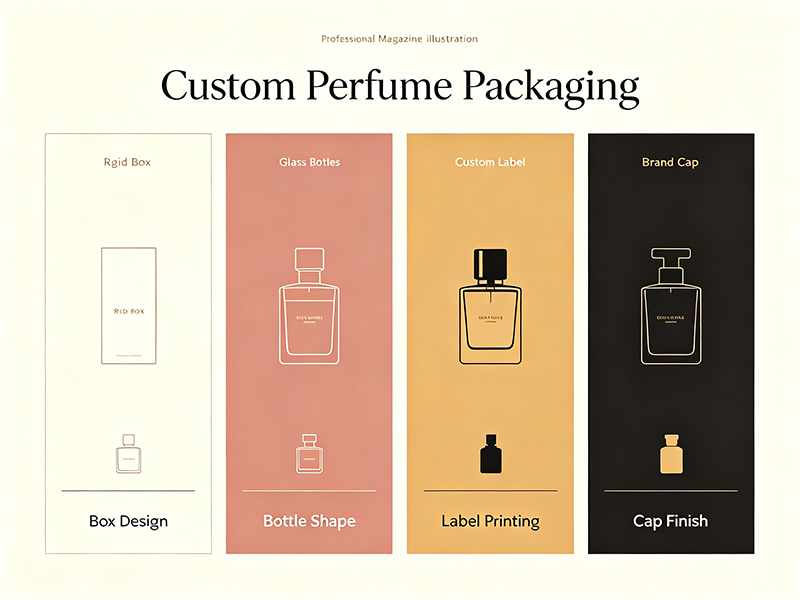
How to Reduce Custom Perfume Packaging Cost Without Making It Look Cheap
Cost reduction should remove complexity that consumers do not value, not undermine fit, function, or reliability.
Use a Proven Stock Bottle
Avoid new glass tooling during market validation. Invest in color, printing, cap finish, or box details that create visible identity.
Keep a Standard Neck and Proven Pump
Standardized, tested closure geometry can reduce development risk and make sourcing more predictable.
Choose One Hero Detail
A signature gradient, precise foil logo, sculptural cap, plaque, or strong box can become the main brand asset. Customizing every component may dilute the effect and multiply MOQ.
Share Components Across SKUs
Use one bottle family, pump, cap structure, and box size where possible. Differentiate fragrances through artwork, labels, or controlled color changes.
Reduce Color Fragmentation
Each sprayed color or printed artwork can create separate setup and minimum requirements. A shared bottle color with fragrance-specific box artwork may be more efficient.
Optimize Glass Weight
Use enough glass to achieve stability and the intended feel, but review whether additional weight creates meaningful value. Lower weight can reduce material, packing, and freight.
Prefer a Folding Carton When a Rigid Box Is Not Essential
A well-designed folding carton with disciplined print and finishing can feel premium while using less material, labor, freight volume, and storage.
Approve Components in the Correct Sequence
Freeze glass and closure dimensions before developing the box. Late rework is avoidable cost.
Plan Reorders Before Buying Excess Components
If closures require 10,000 pieces but the first bottle run is 3,000, confirm that the pump and cap design will remain stable for future production. Do not accumulate excess inventory for a concept that may change.
Negotiate Scope, Not Only Price
Ask which specification changes reduce cost most: lower glass weight, standard cap insert, fewer print colors, simpler insert, shared components, or more efficient packing. This is more productive than requesting an unsupported price reduction with no design change.
Hidden Costs That Common Quotations May Exclude
Before comparing offers, check for:
Design or technical-drawing fees
Glass and cap molds
Tooling revision
Screens, dies, masks, and fixtures
Color matching
Sample production
Sample courier
Pump and cap fit testing
Formula-compatibility work
Third-party inspection
Laboratory testing
Assembly
Individual bags and dividers
Export pallets
Repacking after inspection
Inland freight
Port and documentation charges
Insurance
Destination fees
Duties and taxes
Storage for excess components
Replacement of obsolete inventory after a design change
Ask the supplier to state inclusions, exclusions, quote validity, trade term, payment terms, and when production lead time begins.
Payment Terms and Cash-Flow Planning
Payment timing affects working capital even when the total price is unchanged.
At DAXIN, the standard payment structure is:
30% deposit
70% before shipment
Special customers may apply for:
0% deposit
100% before shipment
Final terms depend on approval and project conditions. DAXIN does not use long payment terms as a default structure.
For custom tooling, samples, or special components, payment milestones may differ from mass-production terms. Confirm which payment triggers design work, mold fabrication, component procurement, production scheduling, inspection, and shipment release.
Build a cash calendar:
| Milestone | Expected cash item |
|---|---|
| Design and development start | Design, prototype, or sample charges |
| Tooling approval | Mold or tooling payment |
| Production order | Deposit and committed component inventory |
| Sample or specification change | Possible revision or new-tool charges |
| Pre-shipment release | Balance, inspection, freight booking |
| Import | Freight, duty, tax, customs, local delivery |
| Filling and launch | Filling, formula, warehousing, distribution |
This prevents the brand from treating packaging as one payment that occurs immediately before launch.
Production Time Also Has a Cost
At DAXIN, normal production time is approximately 30–35 days after the necessary details and samples are approved. High-season production is around 40 days. Custom mold development, trial glass, decoration sampling, revisions, shipping, customs, filling, and retail delivery occur before or after that production period and require additional time.
Delays can create:
Airfreight premiums
Missed retailer or distributor windows
Idle formula or filling capacity
Rush inspection or repacking
Marketing rescheduling
Working capital held in incomplete components
Ask for a milestone schedule separating:
Design and technical review
Tooling
Trial samples
Decoration and closure samples
Complete-pack approval
Mass production
Inspection
Export and transit
A low quote with an unrealistic schedule can become the most expensive option if the brand must recover the launch through emergency logistics.
How to Compare Custom Perfume Packaging Quotations
Create a normalized comparison sheet. Every supplier should quote the same specification and quantity.
| Comparison field | Supplier A | Supplier B | Supplier C |
|---|---|---|---|
| Bottle code, capacity, weight, neck | |||
| Stock or custom mold | |||
| Bottle purchase quantity and unit price | |||
| Pump specification, MOQ, unit price | |||
| Collar finish and price | |||
| Cap material, structure, MOQ, price | |||
| Decoration process and colors | |||
| Box and insert specification | |||
| Tooling and setup | |||
| Samples and revisions | |||
| Inspection and testing | |||
| Inner and export packing | |||
| Production time after approval | |||
| Trade term and destination | |||
| Payment terms | |||
| Excess inventory after first filling | |||
| Total project cash before import | |||
| Estimated landed cash per sellable unit |
Do not fill missing lines with zero. Mark them as “not quoted” and request clarification. A supplier with a higher visible total may simply have included more of the actual project.
Information Needed for an Accurate Custom Perfume Packaging Quote
Send the supplier:
Brand and Commercial Information
Target market
Retail and wholesale channel
Desired quality and price position
Launch date
Destination and preferred trade term
Bottle Information
Capacity and fill volume
Quantity by SKU
Stock or custom shape
Reference images or technical drawing
Target dimensions and glass weight, if required
Neck finish
Pump and Cap Information
Pump type, dosage, finish, and functional requirements
Collar style and color
Cap material, shape, finish, weight, and closure behavior
Standard or custom cap preference
Decoration Information
Transparent, translucent, or opaque color
Physical color reference
Gloss, matte, frosted, or metallic effect
Artwork files
Number of print colors
Coverage and position
Required performance tests
Box Information
Folding carton or rigid box
Dimensions or complete bottle sample
Material and thickness
Printing and finishing
Insert material
Barcode, label, and regulatory artwork requirements
Quality and Logistics Information
Inspection standard
Testing requirements
Individual protection
Carton and pallet needs
Delivery destination
Required documentation
The clearer the RFQ, the more useful the cost answer. A supplier that quotes a fully custom project without this information is pricing assumptions rather than the finished package.
Questions to Ask About Custom Perfume Packaging Cost
What exactly is included in the unit price?
What is excluded?
What specification and quantity support the price?
What is the MOQ for every component, color, and process?
Which components will remain after the first filling run?
Which charges are one-time and which repeat?
Does the tooling quote include drawings, trial samples, and corrections?
Who owns the molds, screens, dies, and artwork files?
Are samples made with production-equivalent materials and processes?
How many sample revisions are included?
Is protective inner packing included?
Are assembly and final-pack inspection included?
What tests are included, and which cost extra?
What trade term does the quote use?
What carton count, gross weight, and cubic volume are expected?
When does the production lead time start?
How long is the quote valid?
What specification changes would reduce cost most?
What changes would increase MOQ or rejection risk?
What is the expected reorder cost after tooling is complete?
These questions shift the conversation from a headline bottle price to a commercially complete packaging decision.
Common Costing Mistakes Fragrance Brands Should Avoid
Asking for a Price From a Mood Board
A mood board can establish direction but does not define capacity, weight, neck, materials, artwork, quantity, box, packing, or delivery.
Comparing Different Specifications
Two “50ml luxury bottles” may differ in glass weight, finish, cap material, pump, box, inspection, and packing.
Treating the Bottle MOQ as the Project MOQ
Pumps, caps, sprayed colors, boxes, and special finishes may have different minimums.
Ignoring Excess Inventory
Unused components consume cash and can become obsolete when artwork, color, fit, or brand direction changes.
Allocating Tooling Over Unrealistic Volume
Use credible lifetime demand. A forecast does not reduce the cash paid for tooling today.
Finalizing the Box Before the Bottle Assembly
A later change to the pump, collar, or cap can force new samples and dies.
Choosing More Decoration Than the Brand Needs
Every additional effect adds cost and failure points. One controlled hero detail may create stronger recognition.
Negotiating Price Without Changing Scope
Persistent price pressure can remove service, inspection, materials, or margin. Ask which design choice changes cost instead.
Forgetting Freight and Import Costs
Heavy glass and large rigid boxes can materially change landed economics.
Assuming the First Order and Reorder Cost Are Equal
The first order may include molds, setup, samples, and excess component purchases. A reorder may use existing tooling and inventory—or require new setup and price confirmation.
Final Budget Checklist
Before approving custom perfume packaging, confirm that:
The bottle, pump, collar, cap, decoration, box, and insert are fully specified
Every component and process MOQ is recorded
Purchase quantity and first filling quantity are separated
Excess inventory has a credible reuse plan
One-time and recurring costs are separated
Tooling scope, ownership, revisions, and storage are documented
Sample rounds and courier costs are budgeted
Complete assembly and golden samples are approved
Quality standards, testing, and inspection are included
Protective packing matches the finish and shipping route
The trade term and quote validity are clear
Freight is based on realistic weight and volume
Import duty, tax, and local charges have been reviewed separately
Payment milestones fit cash flow
Development time and production time are separated
First-run and reorder economics have both been calculated
The product retains an acceptable contribution margin under a conservative sales scenario
If these items are not known, the project does not yet have a complete cost—only a partial quotation.
Final Thoughts
So, how much does custom perfume packaging cost? It costs the total of every component and process required to create, protect, deliver, and finance the sellable pack—not merely the amount printed beside the glass bottle on a quotation.
For a new brand, a stock bottle with controlled decoration and shared standard components can often protect cash while still creating a recognizable identity. For an established fragrance business with credible volume, a proprietary bottle or cap may justify tooling by supporting long-term differentiation. In either case, the decision should be based on total cash exposure, landed cost, performance, timing, inventory, and contribution margin.
Avoid suppliers that offer a confident final price before understanding the specification. A professional OEM/ODM perfume packaging supplier should confirm capacity, quantity, bottle route, pump, cap, decoration, box, testing, packing, destination, and schedule before issuing a complete quotation.
If you are preparing a custom perfume packaging budget, share the quantity by SKU, bottle capacity, stock or custom-mold preference, decoration, pump and cap requirements, box structure, target market, delivery destination, and launch date. This allows the glass bottle, closure, surface finishing, outer packaging, MOQ, and logistics to be evaluated as one commercially sustainable system.
Perfume Bottle FAQs:
1. How much does custom perfume packaging cost per unit?
There is no universal unit price because the specification may include stock or custom glass, different bottle weights, pumps, caps, decoration, boxes, inserts, packing, and order quantities. Calculate the complete used-set cost, then separately calculate total project cash and landed cost per first-run sellable unit. A reliable supplier needs a detailed RFQ before providing a final price.
2. Is a custom perfume bottle more expensive than a stock bottle?
A custom bottle normally requires new tooling, engineering, trial glass, revisions, and a higher glass minimum, so its launch investment is usually greater. A stock bottle uses existing tooling and can be customized through color, printing, caps, and boxes. The better choice depends on volume, brand differentiation, timing, cash flow, and the expected life of the design.
3. What is the MOQ for custom perfume packaging?
MOQ varies by supplier, component, process, color, and artwork. At DAXIN, custom glass bottles use a 10,000-piece planning reference, stock bottles 3,000 pieces, caps and pumps 10,000 pieces, paper boxes 3,000 pieces, spraying 3,000 pieces per color, silk printing 1,000 pieces, and electroplating 10,000 pieces. Final minimums must be confirmed for the actual specification.
4. How much does a custom perfume bottle mold cost?
There is no responsible universal mold price. Cost depends on bottle size, geometry, mold structure, cavities, material, engineering, trial samples, corrections, expected life, and what the quote includes. Ask the supplier to separate design, physical tooling, trials, revisions, ownership, maintenance, and storage terms before comparing mold quotations.
5. Which part of perfume packaging costs the most?
The largest cost varies by design. Heavy custom glass, a metal or multi-part cap, complex decoration, and a rigid box can each become major cost centers. The highest-MOQ component may create the greatest cash burden even when its unit price is modest. Brands should compare total project cash rather than assume the bottle is always the most expensive part.
6. How can a new fragrance brand reduce packaging cost?
Use proven stock glass, standard neck and pump geometry, shared components across fragrances, fewer sprayed colors, one strong decoration detail, and a folding carton when a rigid box is not essential. Freeze the bottle and closure before developing the box. Reduce complexity that consumers do not value rather than compromising fit, spray performance, durability, or quality control.
7. Are tooling and samples included in perfume packaging unit prices?
Not always. Tooling, screens, dies, color development, prototypes, decorated samples, courier, testing, and revisions may be quoted separately. Ask the supplier to state every inclusion and exclusion and distinguish one-time from recurring charges. Do not divide tooling over projected lifetime volume when calculating the immediate cash needed to launch.
8. How long does custom perfume packaging production take?
At DAXIN, normal production is approximately 30–35 days after required details and samples are approved, with high-season production around 40 days. Custom mold development, trials, decoration sampling, revisions, shipping, customs, and filling require additional time. A complete project schedule should separate development, mass production, inspection, and delivery.