
Perfume Bottle Decoration Methods: A Brand Owner's Guide
Perfume Bottle Decoration Methods: A Brand Owner's Guide
Choosing among different perfume bottle decoration methods is not simply a matter of selecting the finish that looks most luxurious in a presentation. Decoration affects how a fragrance is positioned, how clearly the logo can be reproduced, how the bottle feels in the hand, how well it survives filling and distribution, how much inventory the brand must purchase, and how consistently the design can be repeated across future production.
A clear bottle with one-color printing can communicate modern restraint. The same glass shape can become romantic through a translucent gradient, dramatic through a dark opaque coating, or highly reflective through metallization. Frosting changes both light transmission and touch. Hot stamping can create a precise metallic focal point, while digital UV printing can reproduce detailed multicolor artwork. The process is therefore part of the brand architecture, not an isolated production step.
However, every decoration technique has limits. Bottle geometry may distort artwork. A coating that matches a digital rendering may vary under different light. A metallic foil may require a flatter printing area than the original design provides. Multiple sprayed colors can multiply the real minimum order. A beautiful sample can still fail in mass production if color standards, adhesion, abrasion resistance, artwork position, and packing protection were never defined.
This guide explains the main perfume bottle decorating techniques from a brand owner's perspective. It compares their visual effects, suitable applications, commercial implications, quality risks, testing requirements, and compatibility with different bottle designs. It also provides a practical framework for selecting, sampling, approving, and inspecting decoration as part of a complete fragrance-packaging system.
Why Perfume Bottle Decoration Matters to Brand Positioning
The glass mold determines the bottle's basic silhouette, but decoration controls much of what the consumer sees at first glance. It can influence whether the package feels clinical, artisanal, glamorous, natural, playful, masculine, romantic, or exclusive.
Decoration performs several functions at once:
Communicates brand name and fragrance information
Establishes the main color and visual mood
Differentiates multiple fragrances that use the same bottle
Creates contrast between the bottle, cap, pump, and box
Controls transparency and visibility of the liquid
Adds tactile character and perceived depth
Highlights a logo, pattern, illustration, or limited-edition story
Helps a stock bottle feel more proprietary
For a brand, this creates a major commercial opportunity. Instead of developing a new glass mold for every product, one proven bottle can support a collection through different colors, prints, caps, labels, and boxes. This reduces tooling exposure while preserving a coherent product family.
Decoration can also become excessive. Too many effects may compete for attention, increase rejection risk, complicate reorders, and weaken rather than strengthen brand recognition. A strong decoration strategy identifies one dominant idea and uses secondary processes only when they reinforce it.
The best question is not “Which process is most premium?” It is:
Which decoration creates the intended brand signal on this bottle, at this quantity, with a level of cost and production risk the business can sustain?
Start With a Decoration Brief, Not a Process List
Before choosing a technique, define what the finished bottle must communicate and how it will be sold. A decoration supplier cannot translate “make it luxurious” into a reliable production specification without more context.
A useful decoration brief should include:
Target customer and retail price position
Fragrance family and emotional direction
Bottle material, shape, capacity, and dimensions
Glass color and surface condition
Target order quantity by SKU and color
Number of artwork colors
Transparent, translucent, or opaque appearance
Gloss, satin, matte, frosted, metallic, or tactile effect
Logo size and required reproduction detail
Front, back, side, shoulder, or full-surface coverage
Cap, collar, pump, and box finishes
Distribution channel and expected handling
Required abrasion, adhesion, chemical, or transport tests
Target sample date and production-completion date
Separate the design objective from the proposed process. For example, the true requirement may be “a deep blue translucent bottle that still reveals the fill level,” not “blue spraying.” This gives the manufacturer room to recommend an appropriate coating system and application method.
Also rank requirements. Exact logo legibility may be mandatory, while a perfect wraparound pattern may be optional. A brand that understands its priorities can make rational tradeoffs when geometry, cost, MOQ, or durability restrict the original concept.
How Bottle Geometry Affects Decoration
The same artwork behaves differently on a flat rectangular bottle, a round bottle, a bottle with curved shoulders, and a sculptural custom shape. Decoration should therefore be considered before glass and cap design are completely frozen.
Flat Panels
Flat front and back panels are generally friendly to screen printing, hot stamping, labels, plaques, and detailed artwork. They provide a stable contact area and make logo position easier to control.
Even flat-looking surfaces may contain slight curvature, recesses, raised edges, or mold seams. Ask the supplier to mark the usable decoration area on a technical drawing rather than relying on appearance alone.
Cylindrical Bottles
Round bottles can support partial or wraparound printing, coating, decals, and some forms of digital printing. Registration becomes more demanding when artwork must align around the circumference or meet at a seam.
Curved Shoulders and Tapered Bodies
Curvature changes contact pressure and can stretch or distort artwork. Hot stamping and direct screen printing may have a smaller practical area. Coating can follow the geometry more easily, but edge coverage and pooling still need control.
Sculptural and Textured Glass
Deep relief, facets, ribs, recesses, and irregular profiles can create strong identity without additional graphics. They can also cause uneven spray coverage, shadow areas, difficult printing contact, and inconsistent metallic appearance. In some cases, decorating a selected panel or adding a plaque is more reliable than trying to cover the complete shape.
Mold Seams and Base Features
Do not place critical graphics over mold seams, sharp transitions, or unstable contact points unless trials confirm feasibility. Heavy bottle bases, push-up geometry, and embossed marks may also affect masking, handling, and fixture design.
Main Glass Bottle Decoration Methods Compared
The following overview is a starting point. Final suitability depends on the actual glass, artwork, equipment, coating or ink system, quantity, and performance requirement.
| Decoration method | Typical visual effect | Best suited to | Main advantage | Main limitation |
|---|---|---|---|---|
| Spray coating | Solid, translucent, gradient, matte, gloss, tinted | Overall color and collection differentiation | Large visual transformation without new glass mold | Color consistency, coverage, curing, and scratching require control |
| Screen printing | Crisp one- or multicolor text and graphics | Logos and relatively simple artwork | Strong direct-to-glass branding and repeatability | Each color adds setup and registration complexity |
| Hot stamping | Metallic or specialty foil detail | Logos, lines, and premium accents | High visual contrast and sharp focal point | Geometry and adhesion limit usable areas |
| Decal transfer | Detailed or multicolor artwork | Illustrations and shapes difficult for direct printing | Supports complex graphics and selected wraparound effects | Application, seams, firing or curing, and handling add steps |
| UV digital printing | Full-color detailed graphics, sometimes tactile layers | Shorter runs, complex artwork, personalization | No screen set for every artwork color | Ink adhesion, opacity, surface shape, and machine area must be tested |
| Frosting or etching | Soft matte, diffused, tactile glass effect | Minimalist, apothecary, natural, or premium concepts | Changes light and touch across the glass | True etching and frost-effect coatings have different properties |
| Vacuum metallization | Mirror, chrome, gold, or colored metallic surface | Dramatic luxury and statement bottles | Strong reflective coverage | Usually opaque; fingerprints, scratching, masking, and coating protection matter |
| Pad printing | Small graphics on curved or irregular areas | Caps, shoulders, small bottle zones | Reaches areas that are difficult for flat printing | Small image area and ink transfer limits |
| Water-transfer printing | Marble, woodgrain, camouflage, complex surface patterns | Irregular shapes and decorative effects | Can follow three-dimensional geometry | Pattern placement and repeatability need clear standards |
| Labels or plaques | Paper, film, metal-look, resin, or separate badge effect | Artisanal, flexible, limited-edition, or layered branding | High graphic flexibility and easy visual updates | Adhesive, alignment, edge lifting, and recyclability require review |
| Embossing or debossing | Permanent relief formed in the glass | Proprietary logos and structural brand details | Durable identity integrated into the bottle | Requires mold design and is not a post-production decoration |
1. Perfume Bottle Spray Coating: The Most Flexible Way to Transform Color
Spray coating applies a colored or clear finish to the glass surface. It is one of the most versatile decoration methods because it can change the complete character of an existing bottle without changing the glass mold.
Visual Effects Available Through Spraying
Depending on the coating system and application, brands can develop:
Transparent tints that allow the liquid to remain visible
Translucent colors that soften light transmission
Opaque solid colors
Gloss, satin, or matte finishes
Frosted visual effects
Gradients from one color to clear
Two-color or multicolor transitions
Masked windows that reveal selected areas of clear glass
Soft-touch effects where suitable systems are available
A translucent amber can support an apothecary or warm botanical identity. A saturated black matte coating can create a heavier, more dramatic impression. A pale gradient can make the same stock bottle feel lighter and more contemporary.
Design Strengths
Spraying works across many bottle shapes and creates the largest visual change per process. It is particularly useful for fragrance collections because one bottle mold can be divided into several SKUs through color.
It can also prepare the surface for additional decoration. A logo may be screen printed or hot stamped over a sprayed base, provided the coating and secondary process are compatible.
Main Production Risks
Brands should define and inspect:
Color match and acceptable variation
Transparency or opacity
Gradient start, end, direction, and density
Gloss or matte level
Coverage at shoulders, corners, base, and recesses
Dust, fibers, pinholes, runs, orange peel, or uneven film
Adhesion and cure
Scratch and rub resistance
Compatibility with secondary printing or foil
Color appearance changes with glass thickness, liquid color, lighting, and background. A color approved on a flat swatch may not look identical on a thick perfume bottle. Approval should be made on the actual glass whenever possible.
Commercial Considerations
Each sprayed color can create a separate setup and production minimum. At DAXIN, the spraying MOQ reference is 3,000 pieces per color. A three-fragrance collection with three colors should therefore be planned at the color and SKU level, not only by total bottle quantity.
2. Silk Screen Printing Perfume Bottles: Direct, Precise, and Brand-Focused
Silk-screen printing transfers ink through a prepared screen onto the bottle. It is widely used for brand names, fragrance names, logos, lines, and relatively simple graphics.
Where Screen Printing Works Well
Screen printing is effective when the design requires:
Crisp text
A strong opaque logo
One or several clearly separated colors
Repeatable placement on a defined bottle panel
Printing directly on clear, frosted, or coated glass
White printing on dark glass can create high contrast. Black or muted ink on clear glass supports a minimalist look. A carefully chosen metallic-look ink may create a subtle effect, although it is visually different from reflective foil or metallization.
Artwork and Geometry Limits
Very fine lines, tiny reversed text, large solid ink areas, or artwork crossing abrupt curves may be difficult to reproduce consistently. The supplier should review line thickness, gaps, font size, print area, and bottle contact surface before screens are made.
Each color is normally printed separately. Multicolor designs require registration between layers, so artwork tolerances and sequence must be agreed. Printing over a coated surface also requires compatibility between the coating, ink, cure, and later handling.
Quality Criteria
Inspect:
Artwork position and rotation
Registration between colors
Ink opacity and color
Edge sharpness
Missing ink, pinholes, smearing, or contamination
Adhesion after curing
Resistance to normal handling and packing contact
At DAXIN, the silk-printing MOQ reference is 1,000 pieces. The final minimum depends on the artwork, colors, bottle, ink system, and production arrangement.
3. Hot Stamping Perfume Bottles: Metallic Detail With Strong Shelf Contrast
Hot stamping transfers a foil or specialty layer onto a prepared surface using controlled heat and pressure. It is commonly used for logos, fragrance names, borders, and selected premium details.
Why Brands Use Hot Stamping
Foil can produce a more reflective and sharply defined metallic accent than ordinary ink. Gold, silver, copper, or colored foil can connect the bottle to a metallic cap, collar, or box detail.
Because hot stamping creates strong visual emphasis, it is often most effective in a limited area. A small gold logo on a matte bottle may feel more refined than covering several elements in competing metallic finishes.
Technical Limits
Hot-stamping dies need stable contact. Deep curves, textured surfaces, recesses, raised details, and artwork close to bottle edges can cause incomplete transfer or distortion. The underlying glass or coating must be compatible with the foil system.
Confirm:
Practical stamping area
Foil color and reflectivity
Artwork detail and edge definition
Adhesion to clear or coated glass
Registration with printed or masked elements
Resistance to rubbing and packing contact
Do not specify “gold” without a physical reference. Foils vary in tone, brightness, warmth, and mirror effect, and they may look different beside an aluminum, electroplated, or metallized cap.
4. Decal Transfer: Detailed Graphics for Complex Visual Stories
Decals carry printed artwork that is transferred to the bottle and then fixed using the process appropriate to the selected decal and substrate. They can support multicolor illustrations, fine detail, selected wraparound designs, and artwork that may be difficult to apply through direct screen printing.
Suitable Brand Applications
Decals can work well for:
Botanical illustrations
Decorative borders
Detailed emblems
Multicolor storytelling
Limited editions
Heritage or artisanal aesthetics
What to Control
Application is a separate production step. Brands should evaluate:
Artwork sharpness and color
Position, rotation, and seam visibility
Wrinkles, trapped air, edge visibility, or distortion
Compatibility with the bottle surface
Fixing or curing conditions
Adhesion and resistance after processing
Production consistency on curved geometry
Decals should not be chosen only because they can reproduce complex artwork. The added design detail must justify the application steps, inspection burden, and possible effect on cost and lead time.
5. UV Printing on Perfume Bottles: Full-Color Flexibility and Fine Detail
UV digital printing deposits and cures ink directly on the substrate using specialized equipment. It can reproduce multicolor graphics, gradients, photographic elements, small batches of changing artwork, and—on suitable equipment—layered or tactile effects.
Advantages for Brand Owners
Digital printing can reduce the need to prepare a separate screen for every artwork color. It is useful when the visual design contains many colors or when several related artworks share the same bottle.
It may support:
Full-color illustrations
Fine graphic detail
Color gradients
Variable names or limited-edition numbering
Opaque white underlayers where required
Selected raised textures on capable systems
Questions to Ask
Equipment capability varies. Confirm:
Maximum printable area and bottle dimensions
Whether the system prints on flat, cylindrical, or irregular surfaces
Need for a primer or white base layer
Ink adhesion to clear, coated, or frosted glass
Color consistency and repeatability
Cure and odor requirements
Resistance to abrasion, moisture, and normal chemical contact
Registration on wraparound or double-sided artwork
Digital capability does not eliminate sampling. A full-color file on screen may reproduce differently on transparent glass, over a colored coating, or beside the liquid.
6. Frosted Perfume Bottles: Soft Light and Tactile Restraint
Frosting reduces the transparency and gloss of the glass, creating a diffused, matte appearance. It can make a bottle feel softer, more tactile, and less visually dependent on liquid color.
Different Routes to a Frosted Appearance
The term “frosted” can describe different processes, including actual surface etching, abrasive treatment, or a sprayed frost-effect coating. These routes do not have identical appearance, texture, durability, cost, or environmental controls.
Brands should therefore ask:
Is the effect created by changing the glass surface or by applying a coating?
Is the finish full coverage or masked?
How uniform is the texture?
Can clear windows or patterns be retained?
How will the surface accept printing, foil, labels, or adhesives?
What cleaning and handling methods are appropriate?
Brand Applications
Frosting often suits minimalist, botanical, wellness, gender-neutral, or understated luxury positioning. A clear logo on frosted glass can create a quiet tone, while black printing adds stronger contrast.
The risk is assuming that every matte surface is the same. Approve the actual texture, haze, translucency, fingerprint behavior, and resistance on the intended glass.
7. Perfume Bottle Metallization: Mirror-Like Impact and Opaque Luxury
Vacuum metallization creates a reflective metallic appearance through a specialized coating process, typically combined with prepared base and protective layers as required by the system. It can produce chrome, gold, colored metallic, or mirror-like finishes.
Visual Strength
Metallization creates strong shelf impact and can make a stock bottle feel highly transformed. It is useful for statement launches, evening fragrances, bold limited editions, and designs where the bottle should act as a reflective object.
Practical Tradeoffs
The finish is generally opaque, so the liquid and fill level may no longer be visible unless the design includes a masked window. Reflective surfaces also make dust, fingerprints, scratches, coating defects, and surface distortion more noticeable.
Confirm:
Metallic tone and reflectivity
Full or partial coverage
Masking boundaries
Compatibility with printing or laser marking
Topcoat and scratch protection
Fingerprint behavior
Packing method
Color relationship to cap, collar, foil, and box
“Gold” should be approved as a complete color system. A bottle, cap, collar, logo foil, and box foil can each appear gold while visibly disagreeing in warmth and reflectivity.
8. Electroplating and PVD for Caps, Collars, and Components
Electroplating and physical vapor deposition are frequently discussed alongside bottle decoration because they create metallic finishes on caps, collars, plaques, or other components. They are not interchangeable with ordinary spraying, and actual process suitability depends on the component material and preparation.
These finishes can create bright, satin, brushed, colored, or dark metallic effects. Their major role is often to coordinate the closure with a printed or metallized bottle.
For brand owners, the key checks are:
Base material and preparation
Finish color, gloss, and texture
Adhesion and abrasion resistance
Color difference between production batches
Fingerprints and surface marks
Fit after coating thickness is applied
Effect on moving or snap-fit parts
Packing protection
At DAXIN, the electroplating MOQ reference is 10,000 pieces. Because caps and pumps also use 10,000-piece planning references, the closure can become the highest inventory commitment in an otherwise lower-MOQ stock-bottle project.
9. Pad Printing for Small or Difficult Areas
Pad printing uses a flexible pad to transfer ink to a selected surface. It is useful for small graphics on curved, recessed, or irregular areas that are difficult to reach through conventional flat printing.
Common applications include cap logos, shoulder marks, small side graphics, and component branding. Its flexible transfer does not mean any area is printable. Image size, surface texture, depth, ink system, and fixture stability still define the result.
Approve position, distortion, edge clarity, opacity, and adhesion on the actual component. Pad printing is often a supporting detail rather than the dominant bottle decoration.
10. Water-Transfer Printing for Organic and Wraparound Patterns
Water-transfer or hydrographic printing can apply decorative patterns over three-dimensional surfaces. Depending on the system and component, it may be used for marble, woodgrain, stone, camouflage, or abstract patterns.
This method can create effects that are difficult to reproduce with a flat screen. The design also contains natural placement variation, which may be part of the intended aesthetic or a quality problem if the brand expects every unit to look identical.
Define:
Pattern scale and direction
Acceptable variation between units
Position of recognizable pattern features
Color and topcoat
Coverage at edges and recesses
Abrasion resistance
Relationship between bottle and cap pattern
This process is most successful when the brand accepts controlled variation rather than demanding graphic registration that the process cannot reliably deliver.
11. Labels, Plaques, and Applied Decorative Elements
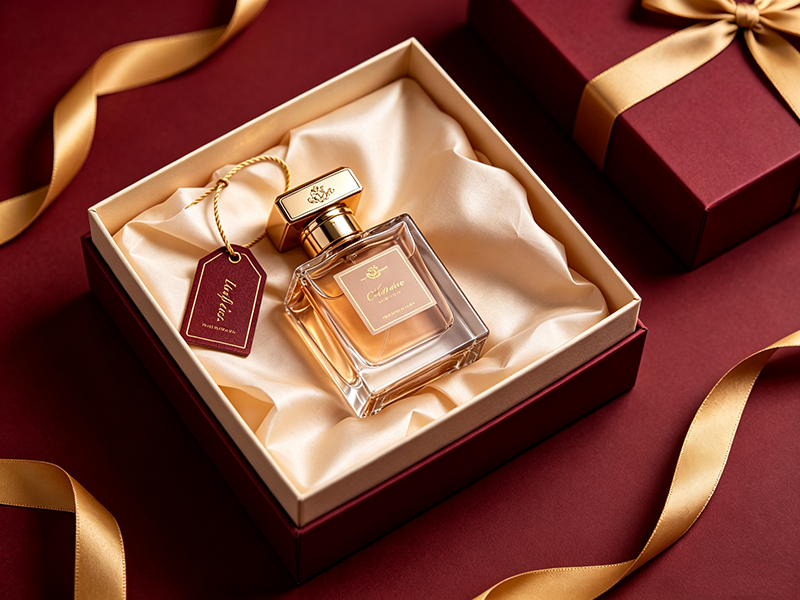
An applied label or plaque can create an intentional layered identity. Materials may include paper, film, metal-look substrates, resin elements, or custom badges, depending on the design and application.
Strategic Advantages
Applied elements can offer:
High graphic complexity
Textured or specialty materials
Easier artwork changes between SKUs
A heritage, apothecary, craft, or limited-edition appearance
Strong contrast against clear, sprayed, or frosted glass
Risks to Evaluate
The supplier should test:
Adhesion to the actual glass or coating
Position and rotation
Edge lifting and bubbling
Resistance to moisture, oils, alcohol contact, and temperature cycling as relevant
Scuffing and delamination
Compatibility with bottle curvature
Application repeatability
Effect on material separation and recycling goals
A label is not automatically a lower-quality choice than direct printing. When the material, typography, adhesive, and application are deliberate, it can be central to premium brand language.
12. Embossing, Debossing, and Molded Glass Details
Embossed or debossed logos are created through the bottle mold rather than added after the glass is produced. They provide permanent relief and can make a proprietary bottle recognizable even without color.
Advantages
Identity is integrated into the structure
No ink or foil is required for the relief itself
The detail can remain visible across several color variants
It can support tactile and light-catching effects
Constraints
Relief affects mold design, glass flow, demolding, inspection, and decoration areas. Fine details may fill inconsistently, while deep or sharp features can create production difficulty. The design must be engineered for glass rather than transferred directly from a flat logo file.
Because molded relief requires an appropriate existing or custom mold, it does not offer the same flexibility as post-production decoration. At DAXIN, the custom glass bottle MOQ reference is 10,000 pieces, compared with 3,000 pieces for stock glass. Brands should invest in relief when it creates long-term identity across multiple production runs.
How to Choose the Right Perfume Bottle Decoration Method
The most appropriate process emerges from a structured comparison rather than trend preference.
1. Start With the Intended Brand Signal
Translate positioning into visual requirements:
Minimal and clinical: clear or frosted glass, restrained printing, precise alignment
Romantic and expressive: soft gradients, warm colors, illustration, foil accents
Bold and nocturnal: opaque dark coating, metallization, strong contrast
Natural and artisanal: amber or clear glass, tactile label, muted ink, wood-look cap
Contemporary luxury: controlled monochrome finish, sharp logo, coordinated metal detail
Playful and collectible: saturated colors, digital artwork, changing SKU graphics
This is not a formula. It is a way to connect creative direction to production choices.
2. Evaluate Bottle Geometry
Mark the usable decoration zones. If a logo must sit on a highly curved shoulder, pad printing, a small plaque, or design relocation may be more reliable than forcing a large hot-stamped mark.
3. Match Artwork Complexity to the Process
A one-color wordmark may not need digital printing. A detailed botanical illustration may not be economical or technically sensible as six separate screen-printed colors. Use the simplest process that produces the required effect consistently.
4. Define Transparency and Liquid Visibility
If the fragrance color or fill level is important, choose clear printing, translucent spraying, partial frosting, or masked windows. Opaque coating and full metallization remove much of that visibility.
5. Decide Which Surface the Consumer Will Touch
Frequently handled surfaces need suitable resistance to rubbing, oils, moisture, and packaging contact. Raised graphics and soft-touch coatings can add sensory value but should be tested for the intended distribution and use.
6. Review Quantity by SKU and Color
Decoration economics often apply per color, artwork, or setup. A total order of 12,000 bottles divided across six sprayed colors is not the same production plan as one 12,000-piece color.
7. Consider Reorder Repeatability
A signature color must be repeatable across future batches. Define a physical master, color target, approved range, substrate, coating system, and viewing conditions. If the brand cannot tolerate visible variation between old and new inventory, the standard must be especially clear.
8. Compare Total Value, Not the Number of Processes
More processes do not automatically create more luxury. One excellent coating and a precise logo often produce greater perceived control than several mediocre effects layered together.
Combining Decoration Methods Without Overdesigning the Bottle
Multiple processes can create depth when the sequence is technically compatible and visually disciplined.
Common combinations include:
Transparent spray coating plus screen-printed logo
Matte opaque coating plus hot-stamped brand name
Frosted glass plus one-color printing
Metallization plus a masked clear window
Gradient spraying plus subtle foil detail
Molded logo plus one restrained color coating
Clear glass plus applied plaque and coordinated cap
Digital illustration plus a simple metallic collar
Every additional layer introduces dependencies. The base coating must accept the ink or foil. Curing temperatures and handling must not damage earlier work. Registration between layers must be defined. Added processing can increase rejection risk, lead time, cost, and packing requirements.
The supplier should provide a proposed process sequence. A typical project might move from glass cleaning to base coating, curing, printing, secondary cure, inspection, and protective packing. The exact sequence depends on the systems involved; it should not be assumed from appearance.
Use a hierarchy:
One dominant surface or color effect
One primary brand mark
One optional accent
If the cap, collar, bottle, label, and box each compete as the main feature, the package may lose visual coherence.
How Decoration Changes Perceived Color
Color approval is one of the most difficult parts of decorated glass because the appearance is affected by more than pigment.
Relevant variables include:
Clear, tinted, recycled-content, or naturally variable glass tone
Glass thickness and base thickness
Transparent, translucent, or opaque coating
Liquid color and fill level
White, black, or reflective background
Gloss, matte, or frosted surface
Indoor retail light, daylight, and photography lighting
Viewing angle
Neighboring cap, foil, and box colors
A digital color value or paper swatch is useful for direction but may not predict the final bottle. Brand owners should approve color on the real glass, with the intended finish, and ideally compare it with the cap and box.
For critical colors, agree on:
Physical approved master sample
Instrumental color target where appropriate
Measurement geometry and location where specified
Acceptable color-difference range
Viewing light and background
Whether old and new batches may be mixed in the same shipment or retail display
Instrumental data can improve communication, but it does not replace a visually approved bottle. Transparent and metallic surfaces can be difficult to characterize with one simple reading, so the control method must match the finish.
Cost Drivers in Perfume Bottle Decoration
Decoration cost is not determined only by the process name. Major cost drivers include:
Order quantity per SKU and color
Bottle shape and handling difficulty
Percentage of surface coverage
Number of artwork colors
Need for primers, base coats, or protective topcoats
Color-development and sampling rounds
Masking, fixtures, screens, dies, or plates
Number and sequence of processes
Manual application or inspection requirements
Cure time and production speed
Expected rejection rate
Protective inner packing
Testing and approval requirements
Compare quotations using the same specification. One supplier may include a protective topcoat and individual bags while another quotes only the visible effect. A lower line-item price is not comparable if durability, packing, or inspection is different.
Calculate cost per sellable unit, including excess components caused by different MOQs. If the bottle decoration supports 3,000 pieces but the custom cap requires 10,000, the closure may create more cash exposure than the glass finish.
Build an MOQ Matrix Before Finalizing the Artwork
At DAXIN, the following planning references apply:
| Component or process | MOQ reference |
|---|---|
| Custom glass bottle | 10,000 pcs |
| Stock glass bottle | 3,000 pcs |
| Cap | 10,000 pcs |
| Pump | 10,000 pcs |
| Paper box | 3,000 pcs |
| Spraying | 3,000 pcs per color |
| Silk printing | 1,000 pcs |
| Electroplating | 10,000 pcs |
Final MOQs depend on the actual bottle, component, material, artwork, color, process, and production plan. These figures should be used to structure the discussion, not presented as universal industry minimums.
Build one row for every SKU and one column for every component and process. For example:
| SKU | Bottle | Spray color | Screen print | Cap finish | Pump | Box |
|---|---|---|---|---|---|---|
| Fragrance A | 3,000 | 3,000 blue | 3,000 white | 10,000 shared gold | 10,000 shared | 3,000 |
| Fragrance B | 3,000 | 3,000 red | 3,000 white | Uses shared gold | Uses shared pump | 3,000 |
| Fragrance C | 3,000 | 3,000 green | 3,000 white | Uses shared gold | Uses shared pump | 3,000 |
This example shows how three separate bottle colors can still share one cap and pump inventory. It also reveals that the brand would purchase 9,000 bottles but 10,000 shared closures. This is more useful than asking for one project MOQ.
Sampling Perfume Bottle Decoration Correctly
A decoration sample should answer specific questions. It should not be treated as a general promise that mass production will look “similar.”
Stage 1: Feasibility Review
Provide the bottle drawing, actual sample, artwork, colors, target finish, quantity, and performance requirements. The supplier marks the usable area, identifies technical limits, and recommends a process sequence.
Stage 2: Color or Effect Trials
For spraying, frosting, or metallization, develop focused trials that establish the surface effect. Limit the number of uncontrolled variables. Comparing three purposeful variations is more useful than requesting many samples without defined differences.
Stage 3: Artwork Proof and Tooling
Approve print files, vector artwork, dimensions, position, orientation, color separations, and any screen, die, plate, mask, or fixture requirements.
Stage 4: Decorated Bottle Sample
Produce the decoration on the actual or production-equivalent bottle. Review color, surface, artwork, adhesion, and interaction with the glass geometry.
Stage 5: Complete Packaging Sample
Assemble the bottle with the pump, collar, cap, label or plaque, and paper box. A bottle can look correct alone but conflict with the cap color or rub against the insert.
Stage 6: Golden Sample and Written Standard
The final approved sample should be connected to a signed specification that records:
Bottle code and version
Decoration process and sequence
Color or physical master
Artwork file and dimensions
Position and tolerance
Gloss, opacity, or transparency requirement
Approved appearance range
Adhesion and resistance tests
Defect classifications
Packing method
Retain matching samples with both brand and supplier where practical. Photographing the golden sample helps identification but does not replace the physical reference for color, gloss, texture, or metallic reflection.
Quality-Control Tests for Decorated Perfume Bottles
Testing should be selected according to the finish, substrate, formula, distribution channel, and buyer requirements. Not every project needs every test, but every project needs defined acceptance criteria.
Visual Inspection
Inspect under agreed lighting and background conditions. Criteria may include:
Color, gloss, opacity, and gradient position
Coverage and uniformity
Dust, fibers, pinholes, bubbles, runs, or orange peel
Print position, rotation, registration, and edge sharpness
Foil completeness and reflectivity
Decal seams, wrinkles, or distortion
Scratches, scuffs, fingerprints, or contamination
Adhesion Testing
Use an agreed tape, crosshatch, or other adhesion method appropriate to the coating or ink. The test procedure, conditioning time, tape or tool, number of cuts or repetitions, and acceptance result should be defined. “Good adhesion” is not measurable enough.
Abrasion and Rub Resistance
Simulate contact during assembly, packing, transport, retail handling, and consumer use. The test may involve dry rubbing, weighted rubbing, or contact with packing material, depending on the risk.
Chemical and Fragrance-Contact Resistance
Perfume, alcohol, oils, cleaning agents, hand creams, or other substances may contact the decoration during filling or use. Test the actual or technically representative materials under conditions agreed with the brand and filler. Do not assume that an external coating is protected from all formula contact.
Temperature and Humidity Exposure
Relevant projects may require checking color, adhesion, labels, or applied elements after controlled temperature or humidity exposure. Test conditions should reflect realistic transportation, storage, or buyer standards.
Assembly and Packing Tests
Check whether crimping, capping, inserting, and carton contact scratch or compress the finish. Verify that bags, dividers, trays, and box inserts do not transfer marks or create abrasion.
Sampling Plan and Defect Classification
Define critical, major, and minor defects. A sharp glass chip is not equivalent to a small cosmetic mark in a low-visibility area. Agree on the sampling plan or AQL approach where appropriate and reserve the right to inspect before shipment.
Common Decoration Defects and Likely Causes
The table below helps brand owners describe problems more precisely. It does not replace a technical root-cause investigation.
| Visible problem | Possible areas to investigate |
|---|---|
| Uneven spray color | Application pattern, viscosity, film thickness, bottle position, curing |
| Runs or pooling | Excess material, geometry, application speed, flash time |
| Dust or fibers | Cleaning, booth environment, handling, packing area |
| Poor adhesion | Surface contamination, pretreatment, incompatible layers, insufficient cure |
| Print pinholes or missing ink | Surface condition, screen, ink transfer, contamination |
| Blurred print edges | Artwork, screen condition, ink control, bottle movement |
| Multicolor misregistration | Fixture position, screen alignment, bottle tolerance, process control |
| Incomplete hot stamping | Curvature, pressure, temperature, dwell, foil compatibility |
| Scratches after packing | Insufficient cure, surface sensitivity, bag or divider contact, movement in carton |
| Label edge lifting | Surface energy, coating compatibility, curvature, adhesive, application pressure |
| Metallic color inconsistency | Base surface, layer thickness, process batch, viewing angle, topcoat |
When a defect appears, record bottle batch, decoration batch, location, frequency, photographs, sample size, and packing condition. A precise problem statement helps the supplier separate an isolated handling issue from a systemic production problem.
Packing Decorated Bottles to Protect the Finish
Decoration is not complete when the process leaves the production line. The surface must survive inspection, packing, shipping, unpacking, filling, and retail distribution.
Protective methods may include:
Individual bags or sleeves
Soft interleaving material
Molded trays
Dividers that prevent bottle-to-bottle contact
Dedicated protection for corners, shoulders, or heavy bases
Controlled orientation in cartons
Clean gloves during handling
Suitable carton strength and pallet pattern
The correct solution depends on the finish. A high-gloss black coating can reveal fine scratches more easily than clear glass. Metallized surfaces may show fingerprints. Raised printing can rub against a tight insert. Soft-touch surfaces may attract dust or mark from certain films.
Approve the packing configuration with the decorated bottle, not with undecorated glass. If bottles will be shipped to a separate filler, communicate unpacking and handling instructions so the decoration is not damaged after supplier release.
Decoration Strategies for Different Fragrance Brands
The following examples show how commercial context changes the best process choice.
Scenario A: Minimalist Niche Fragrance
The brand uses one stock rectangular bottle across three fragrances and wants a restrained, architectural identity.
Practical route: Clear glass or controlled frosting, one-color screen printing, and a shared cap finish.
This keeps the brand system consistent and reduces the need for three complex sprayed colors. Fragrance differentiation can come from the box, a small label detail, or subtle print changes.
Scenario B: Romantic Floral Collection
The brand wants three related fragrances with soft color identities and gift appeal.
Practical route: Translucent gradient spraying in three approved colors, one shared printed logo, and a coordinated metallic accent.
The main commercial issue is that each sprayed color may carry its own minimum and approval sample. The brand should validate whether the projected sales justify three color inventories.
Scenario C: Bold Oud or Evening Fragrance
The brand wants high contrast, low transparency, and a strong shelf object.
Practical route: Opaque dark coating with a limited hot-stamped logo, or partial metallization with a controlled window.
The brand should pay particular attention to scratches, fingerprints, metallic color coordination, and protective packing.
Scenario D: Illustrative Limited Edition
The brand needs detailed artwork that changes by release.
Practical route: UV digital printing or a decal system after confirming equipment, adhesion, geometry, quantity, and intended effect.
The artwork should be tested on the actual bottle and liquid background. Full-color flexibility does not remove the need for durability and registration standards.
Scenario E: Natural or Apothecary Positioning
The brand wants tactile materiality and a less industrial visual language.
Practical route: Amber or clear glass, frosting where appropriate, a carefully specified paper or film label, restrained printing, and a compatible wood-look or muted cap.
Natural visual language should not be confused with automatic environmental performance. Material count, adhesives, coating chemistry, pack weight, and separation should be assessed separately.
Scenario F: Growing Brand Upgrading a Stock Bottle
The brand has proven sales but is not ready for custom glass.
Practical route: Retain the reliable stock bottle and pump, then invest in one high-recognition touchpoint such as a signature sprayed color, custom plaque, or proprietary cap finish.
This concentrates cash on visible differentiation while preserving tested bottle and closure geometry.
Sustainability Questions for Bottle Decoration
Sustainability claims should be specific to the complete process and supported by relevant data. A decoration is not automatically sustainable because it uses less material than another visible option, and a water-based coating is not automatically lower impact in every production context.
Useful questions include:
Does the decoration interfere with glass sorting or recycling in the target market?
How much of the bottle surface is covered?
Can labels or applied elements be separated?
What primers, inks, coatings, foils, adhesives, and topcoats are used?
What curing energy and waste controls apply?
Does the finish increase rejection rates?
Can the bottle be lightweighted without compromising performance?
Can one decorated bottle platform support multiple reorders and reduce obsolete tooling?
Is refill or reuse actually supported by the complete bottle, pump, closure, and consumer system?
Request supplier documentation for any environmental claim the brand intends to use publicly. Avoid broad terms such as “eco-friendly” without a defined basis.
Questions to Ask a Perfume Bottle Decoration Supplier
Before approving the process, ask:
Which decoration method best produces the intended visual effect on this bottle?
What area of the bottle can be decorated reliably?
What design details need to change for production?
Is the process performed internally or by a qualified partner?
What is the MOQ per color, artwork, or setup?
Which fixtures, screens, dies, masks, or plates are required?
What is the sample sequence and cost?
Will the sample use production-equivalent materials and processes?
How will color be approved and controlled in future batches?
What variation should the brand expect in gloss, opacity, gradient, or metallic tone?
How are artwork position and registration controlled?
Which adhesion, abrasion, chemical, or environmental tests are recommended?
Can the decorated surface accept the proposed foil, printing, label, or plaque?
Will cap assembly, crimping, or box insertion contact the finish?
What are the common defects for this process?
What inspection standards and sampling plan will be used?
How will nonconforming bottles be segregated and handled?
What protective packing is included?
What is the production time after the golden sample is approved?
Which changes would increase cost, MOQ, rejection risk, or lead time most?
A capable supplier should explain limitations before mass production. A quick “yes” to every design request is less valuable than a clear account of tradeoffs and a technically sound alternative.
Common Mistakes Brand Owners Should Avoid
Selecting a Process From a Rendering
A rendering communicates appearance but does not prove color, touch, opacity, reflectivity, adhesion, or manufacturability.
Approving Color on a Screen Only
Digital displays vary, and transparent glass changes color perception. Approve the real finish on the real bottle.
Ignoring Bottle Geometry
Artwork designed on a flat template may distort, lose contact, or become unreadable on the actual curve.
Adding Too Many Decoration Layers
Each layer adds cost, tolerance, curing, handling, and inspection dependencies. Use only processes that strengthen the visual hierarchy.
Comparing Unequal Quotations
Confirm whether primer, base coat, topcoat, setup, tests, rejects, individual bags, and protective packing are included.
Forgetting That MOQ Applies per Color or SKU
One total bottle quantity can become several smaller decoration runs with separate minimums and setups.
Finalizing the Box Too Early
The decorated bottle and completed cap assembly determine surface sensitivity, dimensions, insert clearance, and packing contact.
Using “Gold” as a Complete Specification
Gold ink, foil, metallization, electroplating, anodized aluminum, and box foil can differ visibly. Approve them together.
Accepting Vague Quality Standards
Terms such as “no scratches” or “same as sample” should be supported by viewing conditions, defect zones, tolerances, and test methods.
Skipping Production Inspection
A successful prototype does not guarantee a consistent batch. Inspect mass production against the golden sample and written standard.
Final Checklist for Choosing Perfume Bottle Decoration
Before mass production, confirm that:
The decoration supports the intended brand position
The bottle geometry and usable area have been reviewed
The process is suitable for the artwork detail and number of colors
Transparency, opacity, gloss, texture, and reflectivity are defined
Colors are approved on actual glass
Bottle, liquid, cap, collar, and box have been viewed together
Component- and color-level MOQs fit the sales plan
Setup, sampling, testing, packing, and reject assumptions are included in cost
The process sequence and layer compatibility are confirmed
Artwork, position, and tolerances are signed
Adhesion, abrasion, and relevant chemical resistance are approved
Critical, major, and minor defects are defined
The golden sample represents production-equivalent materials and processes
Protective packing has been tested with the finished surface
Reorder color-control standards are retained
The production schedule begins only after required approvals are complete
If these points are documented, decoration becomes a controlled brand asset rather than a late-stage cosmetic decision.
Final Thoughts
The most effective perfume bottle decoration methods are those that translate brand positioning into a finish that can be produced consistently, protected through the supply chain, and reordered at a commercially sustainable quantity.
Spray coating offers broad color transformation. Screen printing delivers direct and precise branding. Hot stamping creates metallic focus. Decals and digital printing support complex artwork. Frosting changes light and touch. Metallization produces dramatic reflectivity. Labels, plaques, pad printing, and molded details solve different design problems. None is universally more premium than the others.
Brand owners should select the process only after reviewing bottle geometry, artwork, liquid visibility, tactile requirements, durability, MOQ, cost, color control, and production risk. A disciplined custom perfume bottle decoration project treats the bottle, pump, collar, cap, decoration, and box as one complete system for sampling and approval.
If you are developing decorated perfume bottles, share the bottle sample or drawing, quantity by SKU, color references, artwork files, cap and pump concept, box design, target market, performance requirements, and launch schedule. An experienced OEM/ODM perfume packaging supplier can help compare practical decoration routes and coordinate the complete pack from glass and surface finishing to components and protective packing.
Perfume Bottle FAQs:
1. What are the most common perfume bottle decoration methods?
Common methods include spray coating, silk-screen printing, hot stamping, decal transfer, UV digital printing, frosting or etching, vacuum metallization, pad printing, water-transfer printing, labels, plaques, and molded embossing or debossing. Each method produces a different visual and tactile effect and has different requirements for bottle geometry, artwork, MOQ, durability, sampling, and inspection.
2. Which decoration method is best for a luxury perfume bottle?
No single method automatically creates luxury. A controlled matte coating with a precise logo may feel more premium than several inconsistent effects. Choose the method that fits the brand position, bottle shape, artwork, cap, box, retail price, and expected handling. Strong color control, fitting precision, finish consistency, and coherent material choices are usually more important than the number of processes.
3. Can stock perfume bottles be custom decorated?
Yes. Stock bottles can be transformed through spraying, printing, hot stamping, frosting, metallization, labels, plaques, and coordinated caps and boxes. This route allows a brand to use proven glass tooling while creating a more distinctive identity. The glass silhouette may remain available to other buyers, but the complete visual system can still be recognizable.
4. What is the MOQ for perfume bottle decoration?
MOQ depends on the bottle, process, color, artwork, and production arrangement. At DAXIN, spraying uses a 3,000-piece reference per color, silk printing 1,000 pieces, and electroplating 10,000 pieces. Stock glass bottles use a 3,000-piece reference and custom glass bottles 10,000 pieces. Final MOQs must be confirmed for every SKU, component, and decoration process.
5. Is screen printing or UV printing better for perfume bottles?
Screen printing is often effective for crisp logos, text, and artwork with a limited number of colors. UV digital printing can support detailed multicolor graphics, gradients, and variable artwork. The better option depends on bottle geometry, artwork complexity, color opacity, quantity, adhesion, durability, equipment capability, and cost. Both methods require testing on the actual surface.
6. How can a brand test perfume bottle decoration durability?
Use tests appropriate to the finish and expected use, such as agreed adhesion, abrasion, rub, chemical-contact, temperature, humidity, assembly, and packing tests. Conditions and acceptance criteria should be written before production. Testing should use the actual bottle, coating or ink system, and relevant fragrance or representative contact materials where required.
7. Why does decorated bottle color vary between samples and production?
Color can be affected by glass tone and thickness, coating film thickness, transparency, curing, liquid color, background, lighting, gloss, and viewing angle. Production control also influences variation. Approve color on actual glass, retain a physical master, define acceptable variation and viewing conditions, and use instrumental measurements where appropriate for the finish.
8. How long does perfume bottle decoration production take?
Timing depends on color development, sample approval, bottle availability, number of processes, curing, component coordination, quantity, and season. At DAXIN, normal production is approximately 30–35 days after the necessary details and samples are approved, with high-season production around 40 days. Decoration development, revisions, and sample shipping occur before the mass-production period and should be planned separately.